What Does IPTV Stand For?
IPTV stands for Internet Protocol Television. Instead of broadcasting TV signals through cables, aerials or satellites, IPTV delivers TV content over your broadband connection, the same way you stream a video online.
You already use IPTV technology if you watch BBC iPlayer, ITVX, Channel 4 streaming, NOW or Sky Stream.
How Does IPTV Work?
- Content is prepared: channels and shows are encoded into digital video.
- It’s sent over the internet: the video travels in small data packets from the provider’s servers to you.
- Your device decodes it: an app or player on your TV, Firestick, phone or set-top box turns the data back into video.
Because it uses your internet connection, you can usually watch on several types of device, not just one TV.
Types of IPTV Content
- Live TV: channels streamed in real time.
- Video on demand (VOD): films and series you can start whenever you like.
- Catch-up and time-shifted TV: shows you can watch after they’ve aired.
What Do You Need to Watch IPTV in the UK?
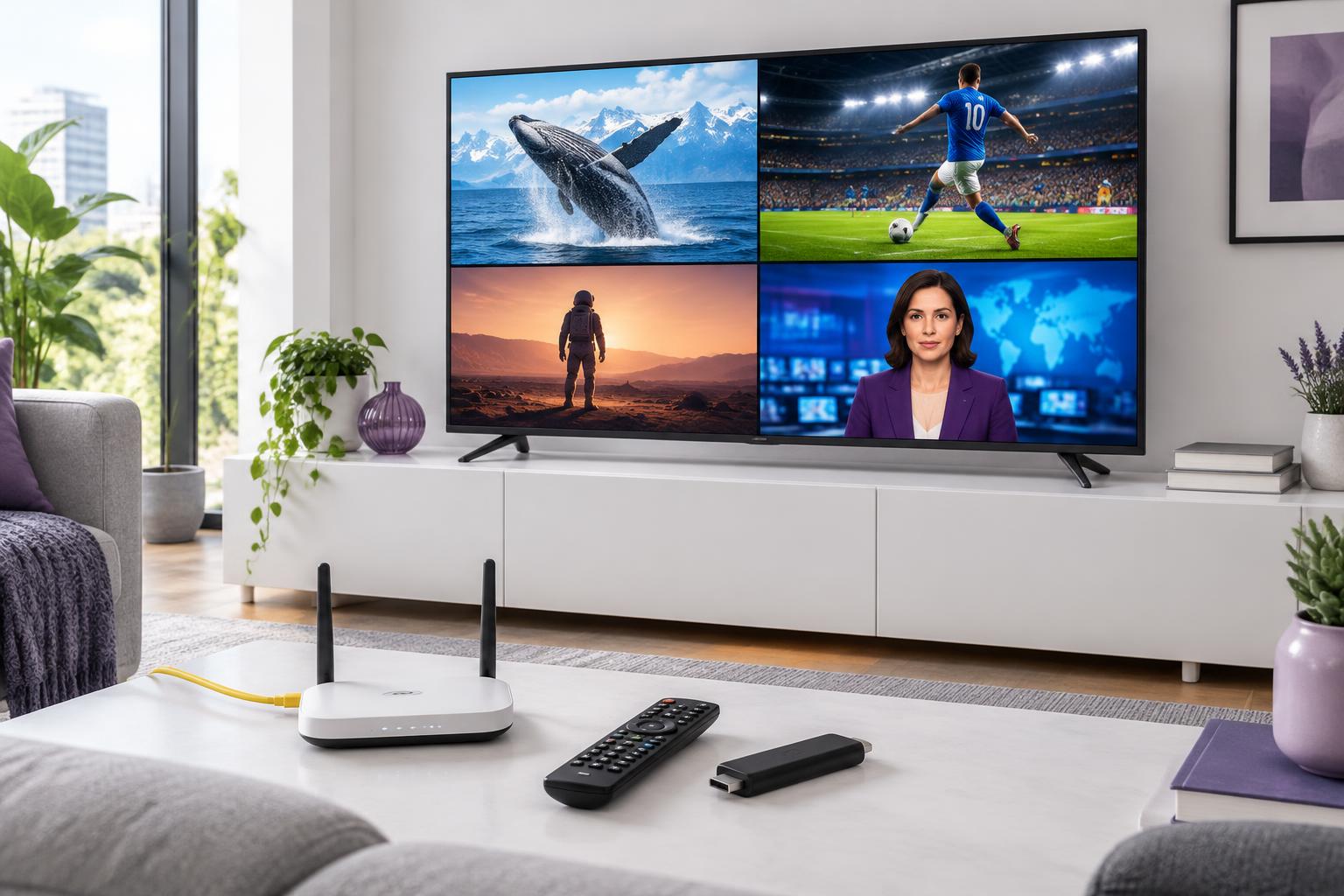
- A stable broadband connection: as a rule of thumb, around 10 Mbps for HD and 25 Mbps or more for 4K per stream. Wired or strong Wi-Fi helps avoid buffering.
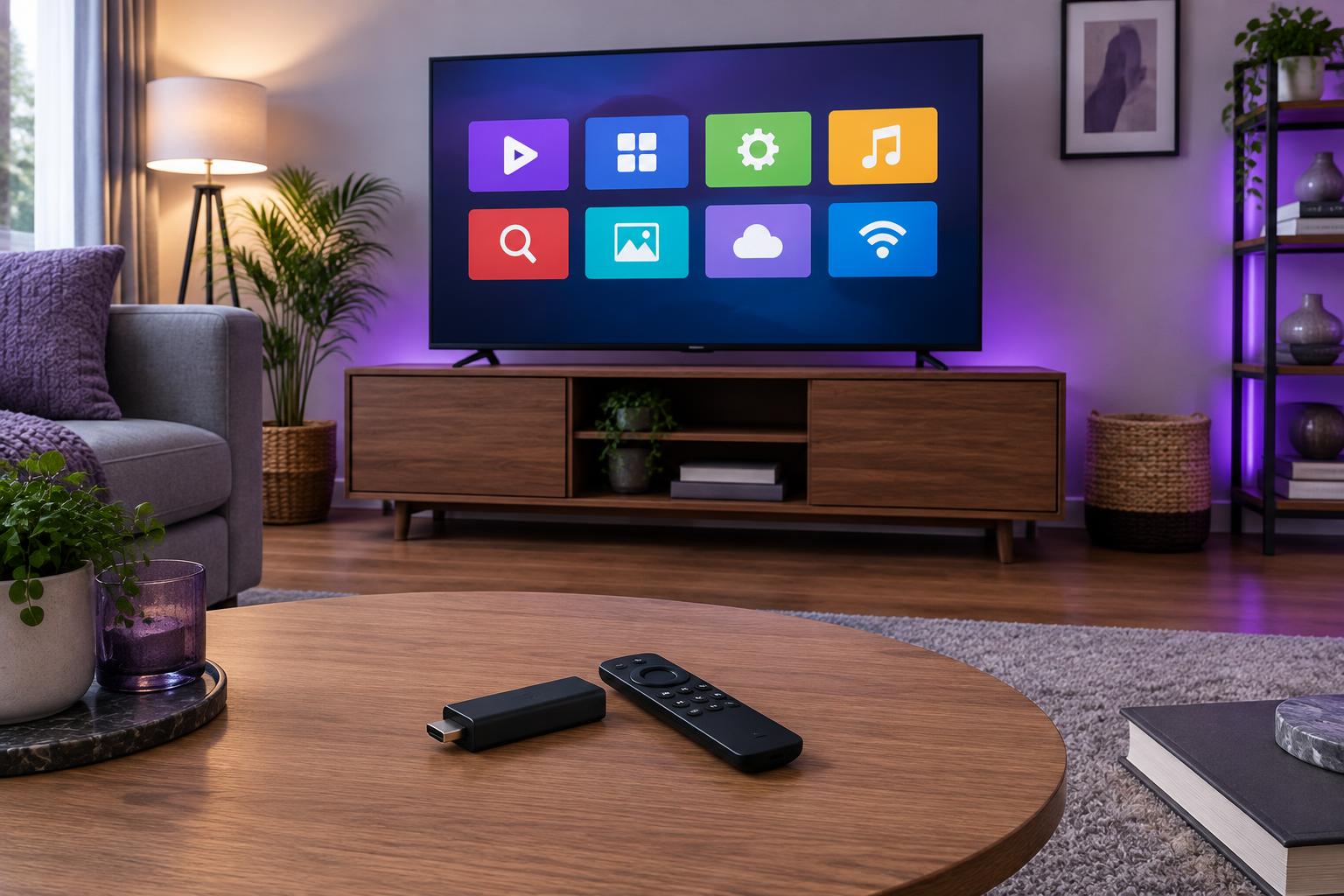
- A compatible device: Amazon Firestick, Android TV, Apple TV, smart TVs, tablets, phones or a PC.
- An app or player supplied by your provider.
Ready to get started? Visit StreamVibeTV to see our plans.
View Our PlansIPTV vs Cable, Satellite and Freeview
| Feature | IPTV | Cable / Satellite | Freeview |
|---|---|---|---|
| Delivered via | Internet | Cable or dish | Aerial |
| Equipment | App or small device | Box, dish or cabling | Aerial and TV |
| Flexibility | Many devices | Usually tied to the home | Limited |
| Needs good broadband | Yes | No | No |
Is IPTV Legal in the UK?
The technology itself is completely legal, and many mainstream services are built on it. What matters is whether the provider is licensed to distribute the content. Streaming or selling access to paid channels without the rights holder’s permission can break UK copyright and fraud laws, and enforcement against unlicensed services has increased. Before you subscribe, check that the provider is transparent about what it offers and how it is licensed.
How to Choose an IPTV Provider
- Clear information about who runs the service and how to contact them
- Transparent pricing with no confusing hidden terms
- Reliable support
- A free trial or a refund policy where available
- Apps for the devices you actually own
- Stable streams that cope well at peak times
Frequently Asked Questions
Conclusion
IPTV is simply TV delivered over the internet, and it gives you more flexibility than traditional TV. With a good connection, a compatible device and a transparent provider, you can start watching in minutes.
Ready to get started? Visit StreamVibeTV to see our plans.
View Our Plans